
Portfolio
Nonlinear Solid Mechanics
Conjugate Heat Transfer


Apps
TorsionSketch
TorsionSketch
Copyright © 2026 Massachusetts Institute of Technology (MIT).
Author: Theron Guo.
Funding: ONR Grant N000142312573 and MIT Department of Mechanical Engineering.
README: How To Use TorsionSketch
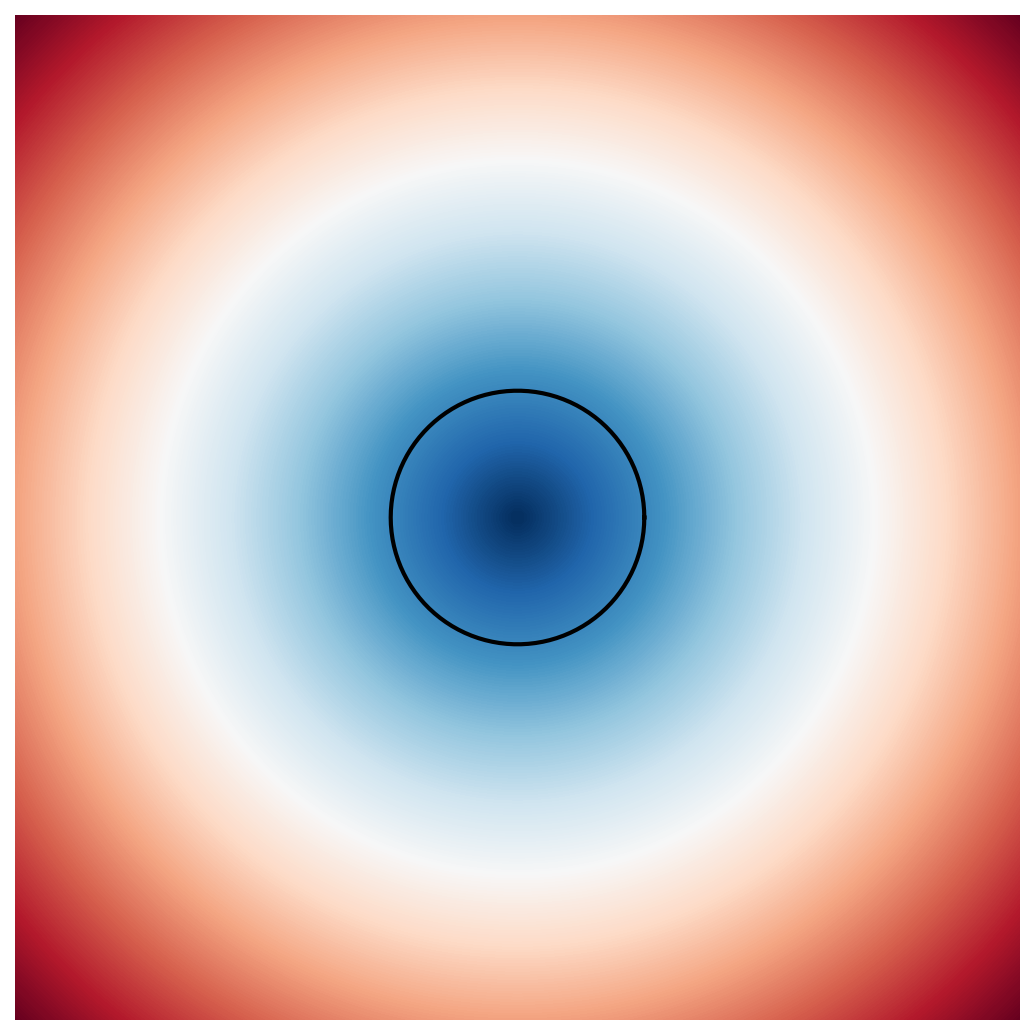
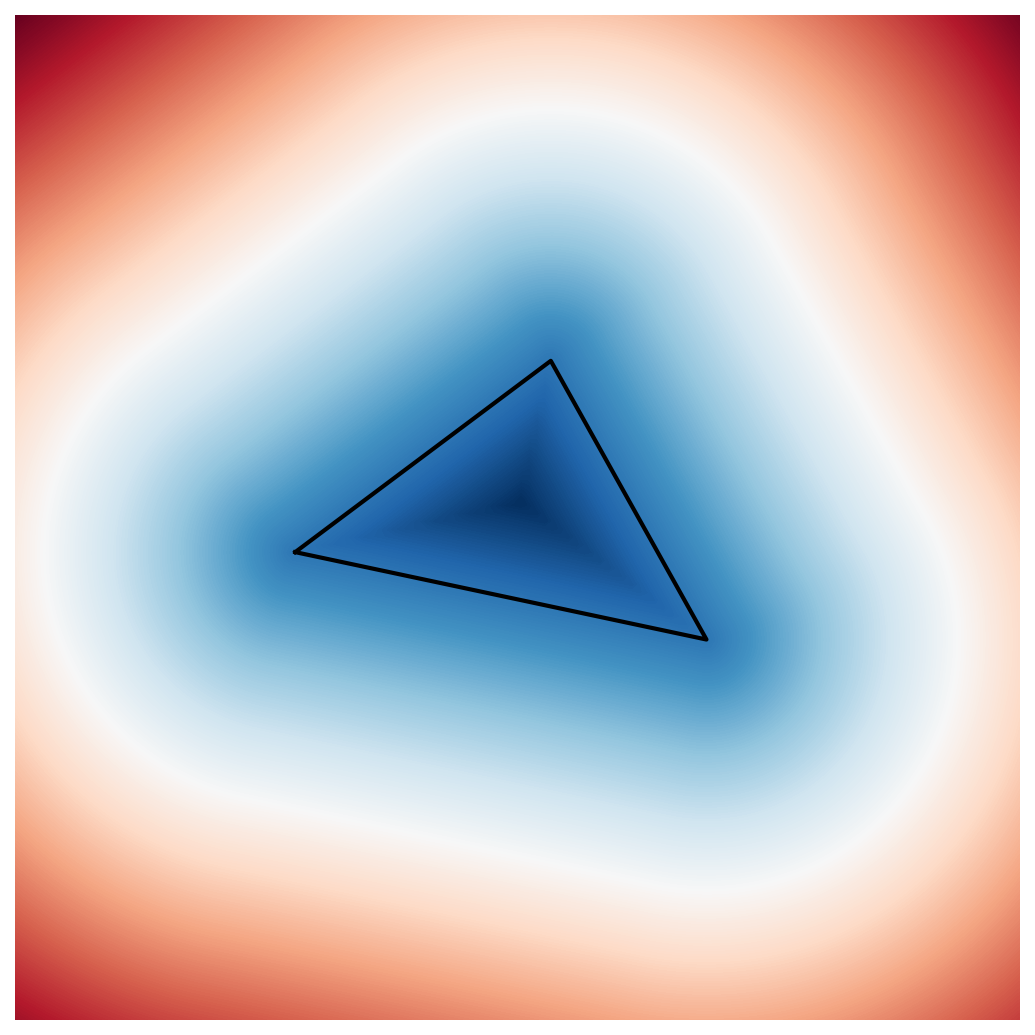
TorsionSketch estimates the torsional rigidity of a 2D cross‑section. You draw a shape, the app converts it into a signed distance field (SDF), and a neural network uses the SDF to predict torsional rigidity.
Quick workflow
- Draw a closed shape in the left panel (free draw or vertex mode).
- Set the
Grid Spacing(distance between grid points in each direction) andGrid Size(number of grid points in each direction). - Check the SDF preview.
- Review the area, perimeter, and predicted torsional rigidity.
- The sentinel value is scale-independent and internally used for the prediction.
Coordinates and grid
- Cursor coordinates are shown relative to the canvas center (0, 0).
- To avoid corner/boundary artifacts, avoid placing points in the immediate vicinity of the sketch-canvas boundary.
- The grid slider sets the
Grid Size(number of grid points in each direction). - For the SDF, the drawn shape is automatically centered and scaled to a fixed area; extreme aspect ratios may affect accuracy.
Prediction accuracy
- The model predicts the scale-independent sentinel, defined as
(torsional rigidity × perimeter²) / area³, and then the torsional rigidity. - The model was trained and tested on many cross sections, including ellipses, rectangles, triangles, I-, L-, C-shaped sections, polygons, and star‑shaped geometries.
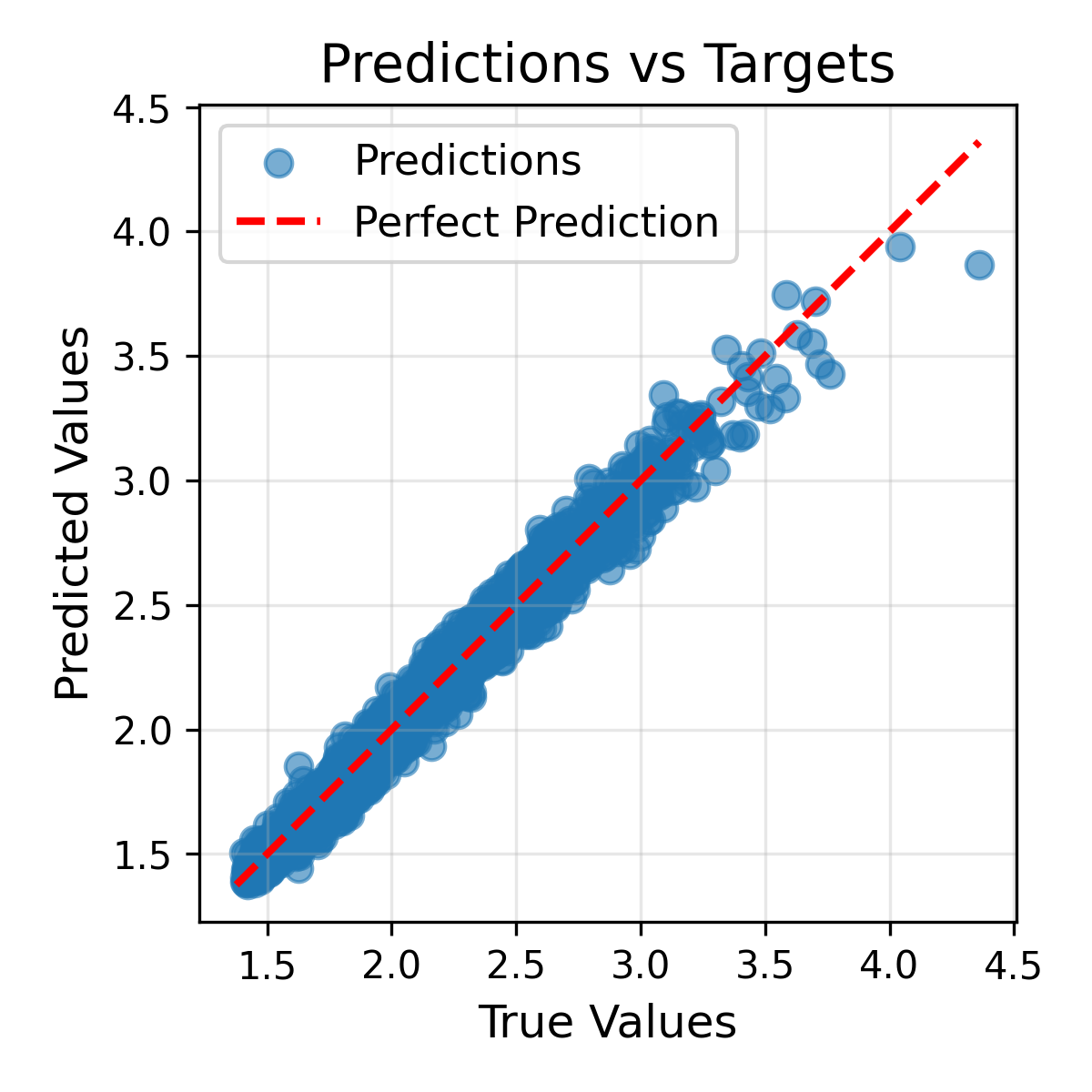
- Average relative error: 0.9%. Maximum error: 20.5%. R²: 0.992.

Gallery




| Case | Sentinel Prediction | Sentinel Exact | Relative Error |
|---|---|---|---|
| Disk | 1.999 | 2.000 | 0.050% |
| Square | 2.249 | 2.250 | 0.044% |
| Equilateral triangle | 2.396 | 2.400 | 0.167% |
| Right isosceles triangle | 2.431 | 2.420 | 0.455% |
| Case | Sentinel Prediction | Sentinel Quasi-Exact* | Relative Error |
|---|---|---|---|
| I-beam | 1.592 | 1.583 | 0.581% |
| L-beam | 1.583 | 1.597 | 0.864% |
| C-beam | 1.506 | 1.521 | 1.019% |
| Polygon arrow notch | 2.324 | 2.283 | 1.779% |
| Polygon wedge | 3.013 | 3.252 | 7.360% |
| Star five point | 2.123 | 2.116 | 0.319% |
| Star mixed modes A | 2.164 | 2.167 | 0.165% |
| Star mixed modes B | 2.494 | 2.472 | 0.890% |
*Here Quasi-Exact refers to a finite element calculation on a fine mesh. The error | Prediction - Exact | is typically dominated by the neural network contribution; therefore, | Prediction - Quasi-Exact | differs negligibly from | Prediction - Exact |. Mesh convergence was verified using uniform mesh refinement and (conservative) extrapolation a posteriori error estimators: we can conclude that |Quasi-Exact - Exact|/|Quasi-Exact| is below 0.05%.
Draw
SDF
Publications
Preprints
Mathematical Modeling and Error Estimation for the Thermal Dunking Problem: A Hierarchical Approach
Published in arXiv, 2025
We consider the thermal dunking problem, in which a solid body is suddenly immersed in a fluid of different temperature, and study both the temporal evolution of the solid and the associated Biot number—a non-dimensional heat transfer coefficient characterizing heat exchange across the solid-fluid interface. We focus on the small-Biot-number regime. The problem is accurately described by the conjugate heat transfer (CHT) formulation, which couples the Navier-Stokes and energy equations in the fluid with the heat equation in the solid through interfacial continuity conditions. Because full CHT simulations are computationally expensive, simplified models are often used in practice. Starting from the coupled equations, we systematically reduce the formulation to the lumped-capacitance model, a single ordinary differential equation with a closed-form solution, based on two assumptions: time scale separation and a spatially uniform solid temperature. The total modeling error is decomposed into time homogenization and lumping contributions. We derive an asymptotic error bound for the lumping error, valid for general heterogeneous solids and spatially varying heat transfer coefficients. Building on this theoretical result, we introduce a computable upper bound expressed in measurable quantities for practical evaluation. Time scale separation is analyzed theoretically and supported by physical arguments and simulations, showing that large separation yields small time homogenization errors. In practice, the Biot number must be estimated from so-called empirical correlations, which are typically limited to specific canonical geometries. We propose a data-driven framework that extends empirical correlations to a broader range of geometries through learned characteristic length scales. All results are validated by direct numerical simulations up to Reynolds numbers of 10,000.
Acknowledgments. This work is supported by ONR Grant N000142312573. We thank Dr Reza Malek-Madani for his support and also for many helpful scientific discussions over the years.
Recent publications
Reduced-order modeling for second-order computational homogenization with applications to geometrically parameterized elastomeric metamaterials
Published in International Journal for Numerical Methods in Engineering, 2024
The structural properties of mechanical metamaterials are typically studied with two-scale methods based on computational homogenization. Because such materials have a complex microstructure, enriched schemes such as second-order computational homogenization are required to fully capture their non-linear behavior, which arises from non-local interactions due to the buckling or patterning of the microstructure. In the two-scale formulation, the effective behavior of the microstructure is captured with a representative volume element (RVE), and a homogenized effective continuum is considered on the macroscale. Although an effective continuum formulation is introduced, solving such two-scale models concurrently is still computationally demanding due to the many repeated solutions for each RVE at the microscale level. In this work, we propose a reduced-order model for the microscopic problem arising in second-order computational homogenization, using proper orthogonal decomposition and a novel hyperreduction method that is specifically tailored for this problem and inspired by the empirical cubature method. Two numerical examples are considered, in which the performance of the reduced-order model is carefully assessed by comparing its solutions with direct numerical simulations (entirely resolving the underlying microstructure) and the full second-order computational homogenization model. The reduced-order model is able to approximate the result of the full computational homogenization well, provided that the training data is representative for the problem at hand. Any remaining errors, when compared with the direct numerical simulation, can be attributed to the inherent approximation errors in the computational homogenization scheme. Regarding run times for one thread, speed-ups on the order of 100 are achieved with the reduced-order model as compared to direct numerical simulations.
A comparative study of enriched computational homogenization schemes applied to two-dimensional pattern-transforming elastomeric mechanical metamaterials
Published in Computational Mechanics, 2023
Elastomeric mechanical metamaterials exhibit unconventional behaviour, emerging from their microstructures often deform- ing in a highly nonlinear and unstable manner. Such microstructural pattern transformations lead to non-local behaviour and induce abrupt changes in the effective properties, beneficial for engineering applications. To avoid expensive simulations fully resolving the underlying microstructure, homogenization methods are employed. In this contribution, a systematic compar- ative study is performed, assessing the predictive capability of several computational homogenization schemes in the realm of two-dimensional elastomeric metamaterials with a square stacking of circular holes. In particular, classical first-order and two enriched schemes of second-order and micromorphic computational homogenization type are compared with ensemble- averaged full direct numerical simulations on three examples: uniform compression and bending of an infinite specimen, and compression of a finite specimen. It is shown that although the second-order scheme provides good qualitative predictions, it fails in accurately capturing bifurcation strains and slightly over-predicts the homogenized response. The micromorphic method provides the most accurate prediction for tested examples, although soft boundary layers induce large errors at small scale ratios. The first-order scheme yields good predictions for high separations of scales, but suffers from convergence issues, especially when localization occurs.
A reduced order model for geometrically parameterized two-scale simulations of elasto-plastic microstructures under large deformations
Published in Computer Methods in Applied Mechanics and Engineering, 2023
In recent years, there has been a growing interest in understanding complex microstructures and their effect on macroscopic properties. In general, it is difficult to derive an effective constitutive law for such microstructures with reasonable accuracy and meaningful parameters. One numerical approach to bridge the scales is computational homogenization, in which a microscopic problem is solved at every macroscopic point, essentially replacing the effective constitutive model. Such approaches are, however, computationally expensive and typically infeasible in multi-query contexts such as optimization and material design. To render these analyses tractable, surrogate models that can accurately approximate and accelerate the microscopic problem over a large design space of shapes, material and loading parameters are required. In this work, we develop a reduced order model based on Proper Orthogonal Decomposition (POD), Empirical Cubature Method (ECM) and a geometrical transformation method with the following key features: (i) large shape variations of the microstructure are captured, (ii) only relatively small amounts of training data are necessary, and (iii) highly non- linear history-dependent behaviors are treated. The proposed framework is tested and examined in two numerical examples, involving two scales and large geometrical variations. In both cases, high speed-ups and accuracies are achieved while observing good extrapolation behavior.
Other publications
Learning constitutive models from microstructural simulations via a non-intrusive reduced basis method: Extension to geometrical parameterizations
Published in Computer Methods in Applied Mechanics and Engineering, 2022
Two-scale simulations are often employed to analyze the effect of the microstructure on a component’s macroscopic properties. Understanding these structure–property relations is essential in the optimal design of materials for specific applications. However, these two-scale simulations are typically computationally expensive and infeasible in multi-query contexts such as optimization and material design. To make such analyses amenable, the microscopic simulations can be replaced by inexpensive-to-evaluate surrogate models. Such surrogate models must be able to handle microstructure parameters in order to be used for material design. A previous work focused on the construction of an accurate surrogate model for microstructures under varying loading and material parameters by combining proper orthogonal decomposition and Gaussian process regression. However, that method works only for a fixed geometry, greatly limiting the design space. This work hence focuses on extending the methodology to treat geometrical parameters. To this end, a method that transforms different geometries onto a parent domain is presented, that then permits existing methodologies to be applied. We propose to solve an auxiliary problem based on linear elasticity to obtain the geometrical transformations. The method has a good reducibility and can therefore be quickly solved for many different geometries. Using these transformations, combined with the nonlinear microscopic problem, we derive a fast-to-evaluate surrogate model with the following key features: (1) the predictions of the effective quantities are independent of the auxiliary problem, (2) the predicted stress fields automatically fulfill the microscopic balance laws and are periodic, (3) the method is non-intrusive, (4) the stress field for all geometries can be recovered, and (5) the sensitivities are available and can be readily used for optimization and material design. The proposed methodology is tested on several composite microstructures, where rotations and large variations in the shape of inclusions are considered. Finally, a two-scale example is shown, where the surrogate model achieves a high accuracy and significant speed up, thus demonstrating its potential in two-scale shape optimization and material design problems.
Learning constitutive models from microstructural simulations via a non-intrusive reduced basis method
Published in Computer Methods in Applied Mechanics and Engineering, 2021
In order to optimally design materials, it is crucial to understand the structure–property relations in the material by analyzing the effect of microstructure parameters on the macroscopic properties. In computational homogenization, the microstructure is thus explicitly modeled inside the macrostructure, leading to a coupled two-scale formulation. Unfortunately, the high computational costs of such multiscale simulations often render the solution of design, optimization, or inverse problems infeasible. To address this issue, we propose in this work a non-intrusive reduced basis method to construct inexpensive surrogates for parametrized microscale problems; the method is specifically well-suited for multiscale simulations since the coupled simulation is decoupled into two independent problems: (1) solving the microscopic problem for different (loading or material) parameters and learning a surrogate model from the data; and (2) solving the macroscopic problem with the learned material model. The proposed method has three key features. First, the microscopic stress field can be fully recovered, which is useful for instance for revealing local stress concentrations inside the microstructure. Second, the method is able to accurately predict the stress field for a wide range of material parameters; furthermore, the derivatives of the effective stress with respect to the material parameters are available and can be readily utilized in solving optimization problems. Finally, it is more data efficient, i.e. requiring less training data, as compared to directly performing a regression on the effective stress. To construct the surrogate model, first, a proper orthogonal decomposition is performed on precomputed microscopic stress field snapshots to find a reduced basis for the stress. Second, a regression is employed to infer the coefficients of the reduced basis approximation for any arbitrary parameter value, thus enabling a rapid online evaluation of the microscopic stress. Equipped with the stress field, the effective stress and its partial derivatives can then be derived analytically. For the microstructures in the two test problems considered, the mean approximation error of the effective stress is as low as 0.1% despite using a relatively small training dataset. Embedded into the macroscopic problem, the reduced order model leads to an online computational speed up of approximately three orders of magnitude while maintaining a high accuracy as compared to the FE2 solver.